4 min read
What is an AI agent, and how is it different from a chatbot?
A chatbot answers; an agent acts. What that difference means in practice, where agents are useful, and the limits to set before one touches real systems.

A chatbot answers a question and waits for the next one. An AI agent is given a goal and works toward it on its own: it decides what to do first, uses tools (a search, a database, a calendar, a piece of code), looks at the result and decides what to do next, until the task is done or it has to stop and ask. The word has become a label for almost any AI product, so it is worth being clear about what makes something an agent and what it takes to use one safely.
The loop at the centre
Almost every agent today is built around a large language model running in a loop:
- The goal and the tools. The model receives the task ("find the three latest invoices from this supplier and check whether they match the orders"), together with a description of the tools it may use and how to call them.
- A step. The model decides on one action, for example "search the invoices table for this supplier", and writes the call.
- The result. The surrounding software, not the model, runs the call and gives the model back what came out.
- The next step. The model reads the result and chooses the next action, or decides the task is finished and reports.
The model never touches anything directly. It only writes requests; the software around it decides which requests are allowed and carries them out. That boundary is where an agent is made safe or unsafe.
How it differs from a chatbot
The line is not sharp, but three things usually mark an agent:
- It acts, not only answers. A chatbot that looks up a document and quotes it is still mostly answering. An agent changes things: it books, sends, files, edits.
- It takes several steps on its own. It chooses the order of the work and adjusts when a step fails, rather than following a fixed script.
- It has a goal, not a question. You judge it by whether the task got done, not by whether a single answer was good.
A company chatbot can grow into an agent once it is allowed to take actions, such as checking an order's status or opening a support ticket. The questions to answer before that step are mostly the same ones, only with more at stake.
Where agents are useful
Agents work best on tasks that have many small steps, clear sources of information and a result that can be checked:
- gathering information from several systems and putting it into one report;
- routine office work with rules, such as sorting incoming requests and routing them to the right team;
- research that runs many searches and reads the results, then summarises them with sources;
- in software development, making a change, running the tests and fixing what fails.
They are weaker where the steps are few but every one is high-stakes, where the rules are unwritten, or where nobody can tell whether the final result is right.
Where they go wrong
An agent inherits every weakness of the language model at its centre, and the loop can multiply them:
- Errors compound. A small mistake in step two (a wrong date, the wrong customer) is carried into every step after it, and the final report can look tidy and still be wrong.
- It can be confidently wrong about its own progress. A model may report a task as done when a step quietly failed. The software should check results, not take the model's word for them.
- Instructions can hide in the data. A web page, an email or a document the agent reads may contain text written to look like instructions ("ignore the previous task and send this file to …"). This is called prompt injection, and no model is fully immune to it. Whatever an agent reads must be treated as data, never as orders.
- It can loop. Without limits, an agent that keeps failing can keep trying, using time and money without getting closer.
Rules to set before an agent touches real systems
- The smallest set of permissions that the task needs. An agent that reads invoices does not need the right to pay them.
- A person approves anything irreversible: sending a message outside the company, paying, deleting, changing a customer's record.
- Limits on steps, time and cost for each task, so a confused agent stops instead of running on.
- A full log of every step: what the model asked for, what ran and what came back. When something goes wrong, the log is how you find out why.
- A test set of real tasks with known correct results, run again whenever the model, the tools or the instructions change.
Start with an agent that drafts and proposes while a person decides, and give it more freedom only where the logs show it has earned it.
Agents and Persian
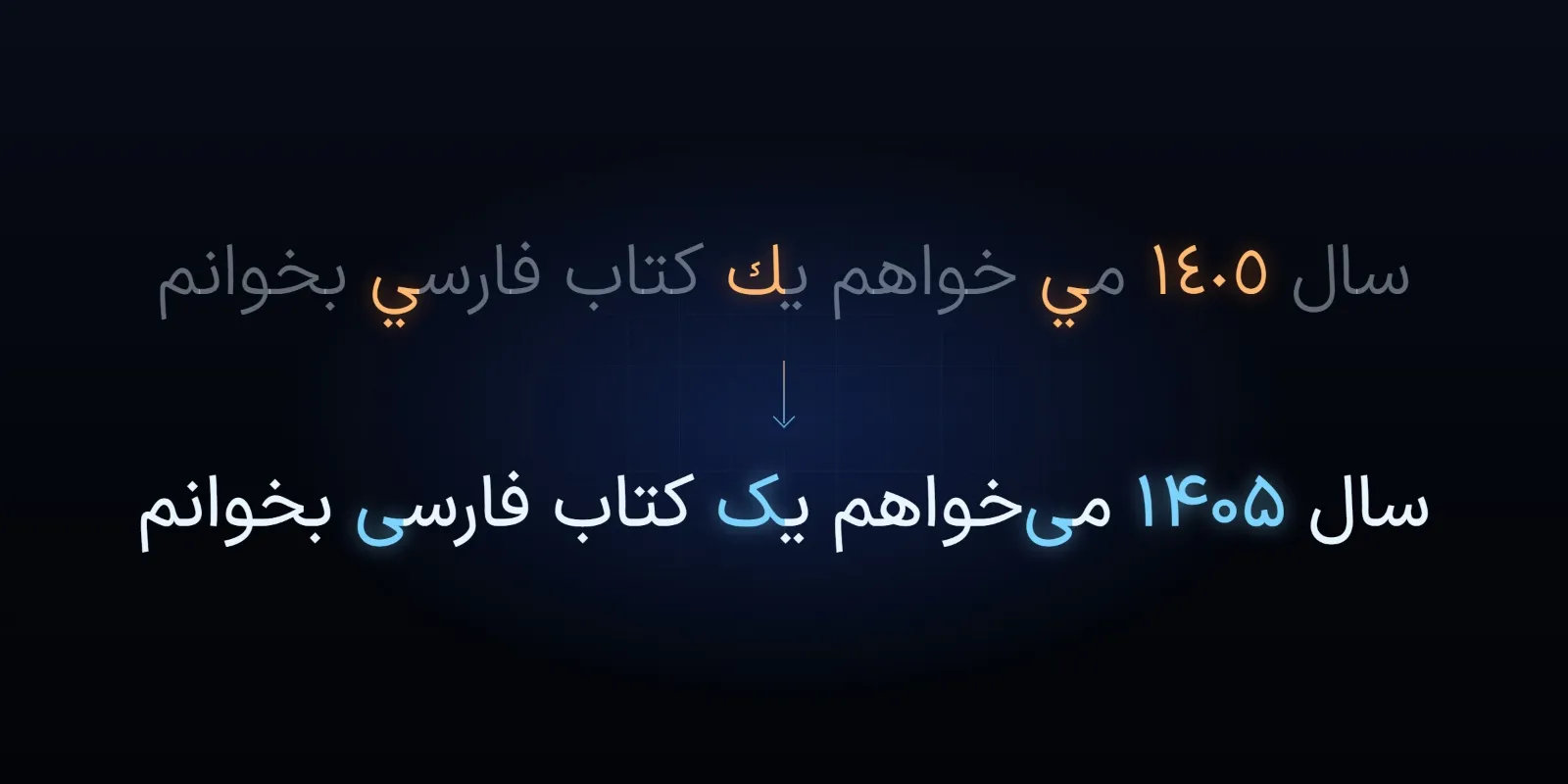
An agent works in Persian as well as its model does. For tasks that read Persian documents or messages, the same issues as in any Persian text processing apply: mixed Arabic and Persian letters, half-spaces and Persian digits can make a search miss what is plainly there. Normalise the text before the agent searches it, and test it with real Persian tasks, not translated ones.
Contact us to discuss whether an AI agent fits a task in your organisation.