3 min read
Case study: Abtin Pars Kia’s construction aggregates website
Fifteen products with their grading limits and test methods, guides by application, a technical library in two languages, and a fast static site.
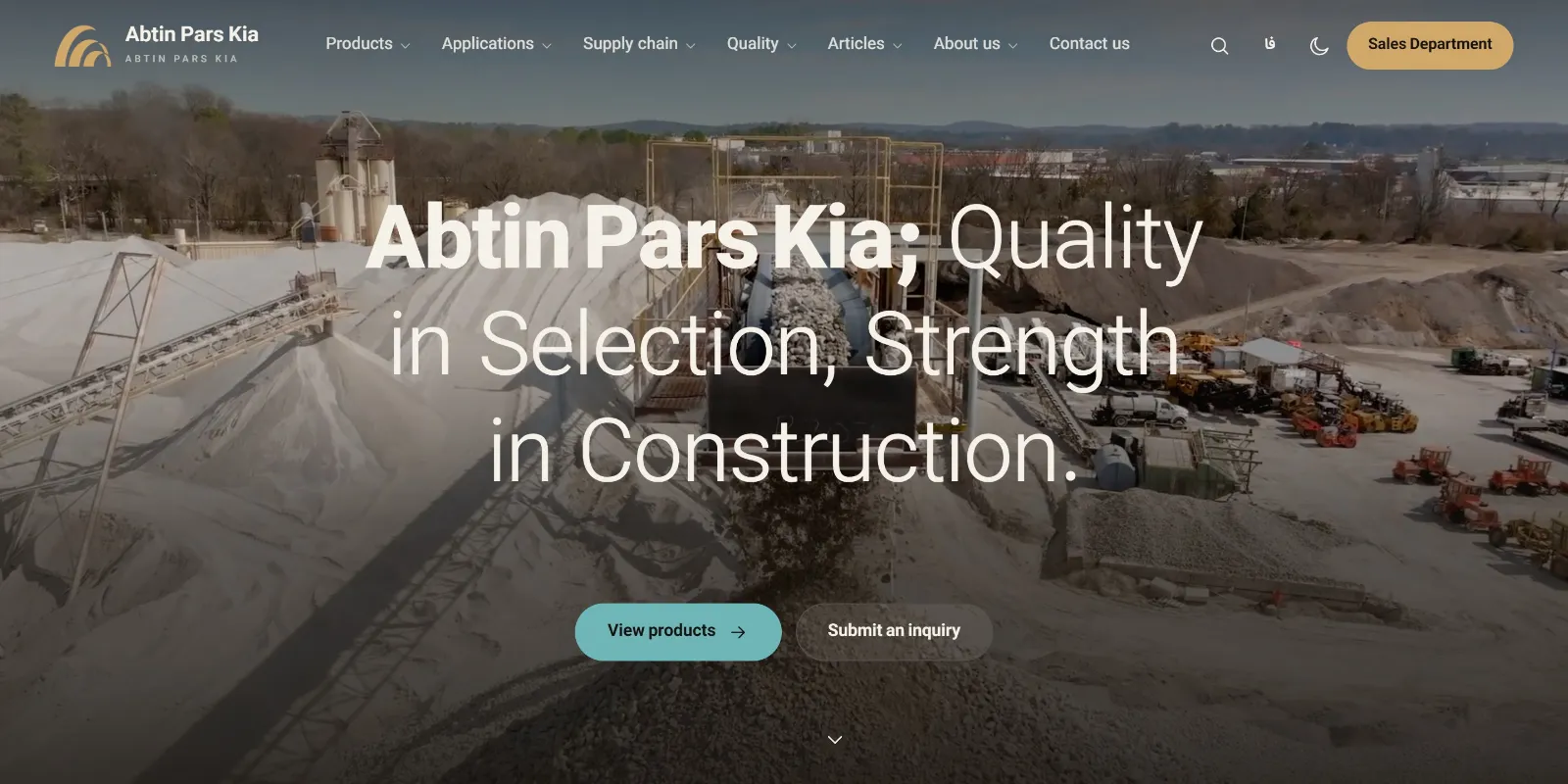
Abtin Pars Kia supplies construction aggregates: sand, gravel, base and subbase materials, rubble stone and fillers. The people who buy aggregates are engineers, contractors and concrete plants, and they buy against a specification: a size range, a grading, a set of tests. Our team designed and built the website to speak that language, in Persian first and in full English.
What the site had to do
- Present each product with the technical facts an engineer checks, not just a name and a photo.
- Help someone who starts from the job, "I'm pouring concrete" or "I'm building a road base", find the right materials.
- Build a library of technical writing that answers the questions people search for.
- Make it easy to ask for a quote, and hard for spam to get through.
A product page an engineer can use
The catalogue has fifteen products in five groups: sand, gravel, base and subbase, rubble and riprap, and fillers. Each has its own page in both languages. A page gives the product's size range and particle type, what it is used for, the test methods that apply to it (sieve analysis, fines content, sand equivalent and so on, with their ASTM numbers), and a grading table of the percent passing each sieve.
That table comes with an honest note: the limits are taken from the reference standard, not test results from a shipment, and the current standard and the project specification have the final word. A site that sells to engineers should not blur the difference between a requirement and a measurement.
Starting from the job
Seven application pages, from concrete and road construction to drainage and slope protection, explain what each kind of work asks of its aggregates and link to the products that fit. Product pages link back to their applications, so a visitor can come in either way and still reach a specific product.
A technical library in two languages
The articles section holds 28 technical articles in Persian and in English, in seven categories: reading a grading curve, correcting mix water for moisture in sand, alkali–silica reaction, keeping stockpiles from segregating and more. Each product page lists related articles, each article sits in a category page of its own, and both languages have their own feed. These are the pages most likely to be found by search, and each one leads to a product.
A quote request that arrives complete
The sales section separates three needs: technical advice, a quote request, and following up an existing request. The inquiry form shows what is missing or wrong next to the field itself, and it quietly screens out bots, by a hidden field and by how fast the form was completed, without asking visitors to solve a puzzle.
Fast, and calm in motion
The site is built with Astro and served as static pages. Most sections ship no JavaScript at all; only the parts that need it, such as the form and the search, load code. Scroll animations are done in CSS and move only what the browser can animate cheaply, and visitors who have asked their system for reduced motion get a still page.
Only what is confirmed
Some things were deliberately left out until the company confirms them. The structured data describes the organisation and the site, but product and local-business details stay off until their facts are verified, and the projects page stays out of search results until it has real projects to show. Adding them later is a small change; taking back a claim a search engine has already shown is not.
Lessons from the project
- Write for the specification. Engineers buy against numbers; a page that shows the right standard and test methods saves a phone call.
- Let people start from the job. Application pages meet visitors who don't yet know the product name.
- Publish facts, hold back guesses. What a site leaves out until it is confirmed matters as much as what it says.
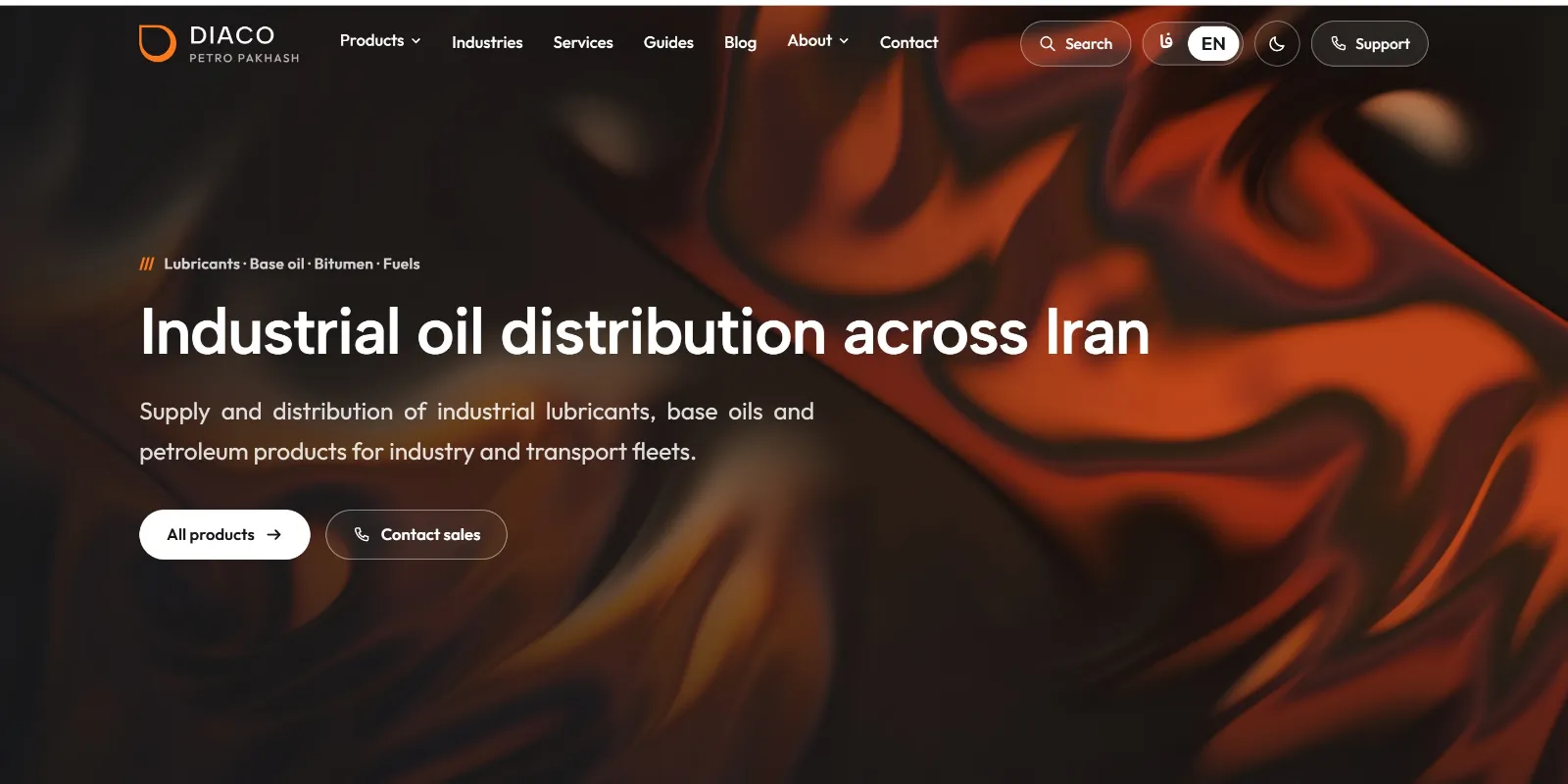
Our team has also written about building bilingual Persian–English websites and SEO for a Persian website. For another industrial catalogue, see our Petro Pakhash Diaco case study.
Contact us to discuss a website for your business.