4 min read
Industrial robots: what they are and the main types
An introduction to six-axis arms, SCARA, delta, gantry and collaborative robots, their applications and the components of a robot cell.
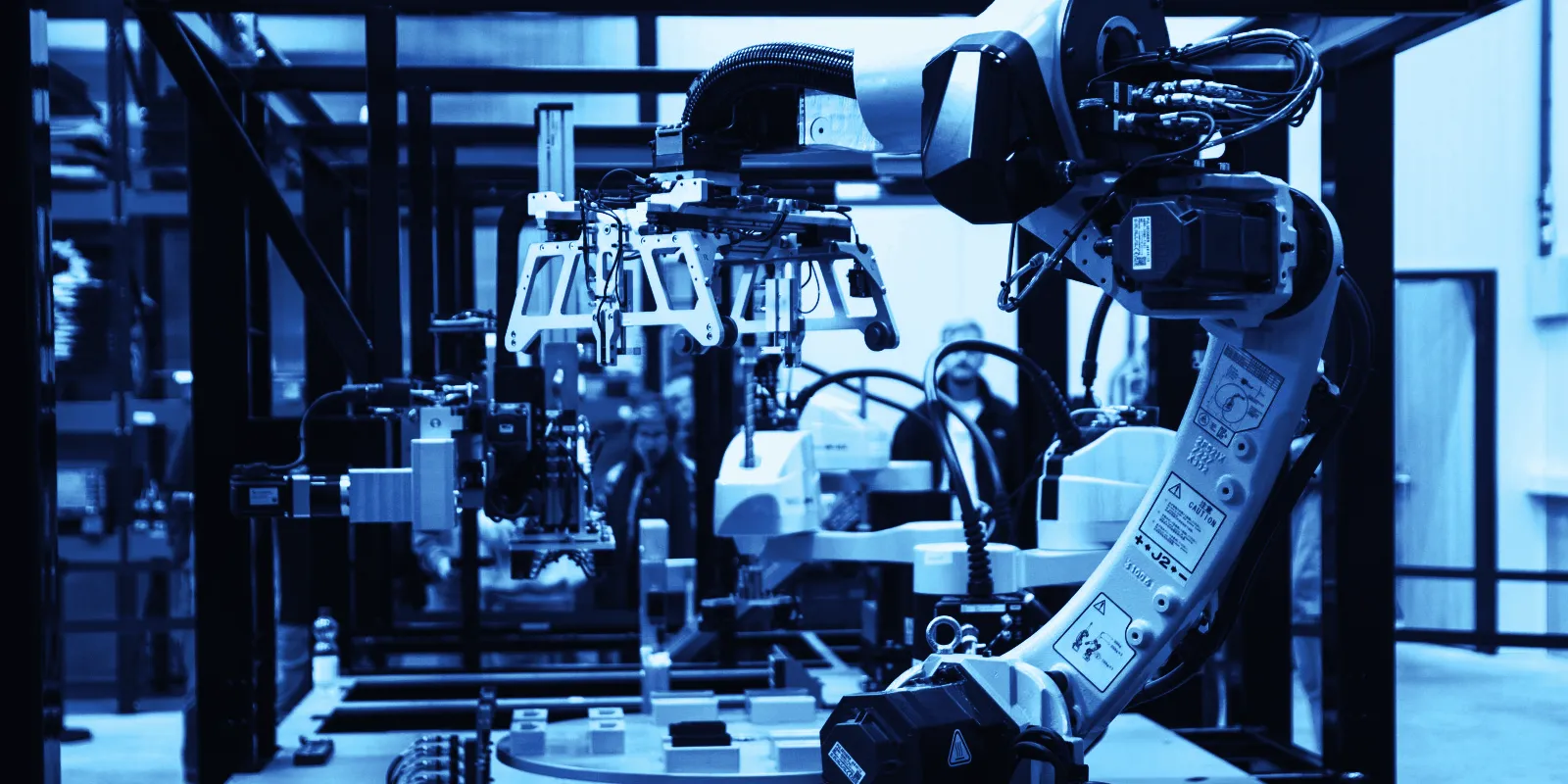
An industrial robot is, in the words of the international standard ISO 8373 (paraphrased), an automatically controlled, reprogrammable, multipurpose manipulator, programmable in three or more axes, used in industrial automation. The important word is reprogrammable: the same machine can weld one product today and handle a different one tomorrow, with a new program rather than a new machine. That is what separates a robot from a special-purpose machine built for a single task.
The main kinds
Articulated robots are the familiar arms, usually with six rotating joints. Six is the number needed to place a tool anywhere in reach and also point it in any direction: three for position, three for orientation. They weld, paint, load machines, palletise and handle parts, and come in sizes from a few kilograms of payload to more than a tonne. (How such an arm works out its joint angles to reach a point is the subject of How a robot arm tracks a moving target.)
SCARA robots have joints that turn about vertical axes, so the arm moves quickly in a horizontal plane, with a vertical stroke at the end. They suit fast pick-and-place and assembly on a table: putting components on boards, screws into holes.
Delta robots hang from above, usually three light arms joined at a small platform. They are built for speed with light items, and are common in food and pharmaceutical packaging, picking products off a conveyor.
Cartesian or gantry robots move along straight axes, x, y and z. They are simple, accurate and can cover large areas, from a desktop dispenser to a gantry that spans a whole machine.
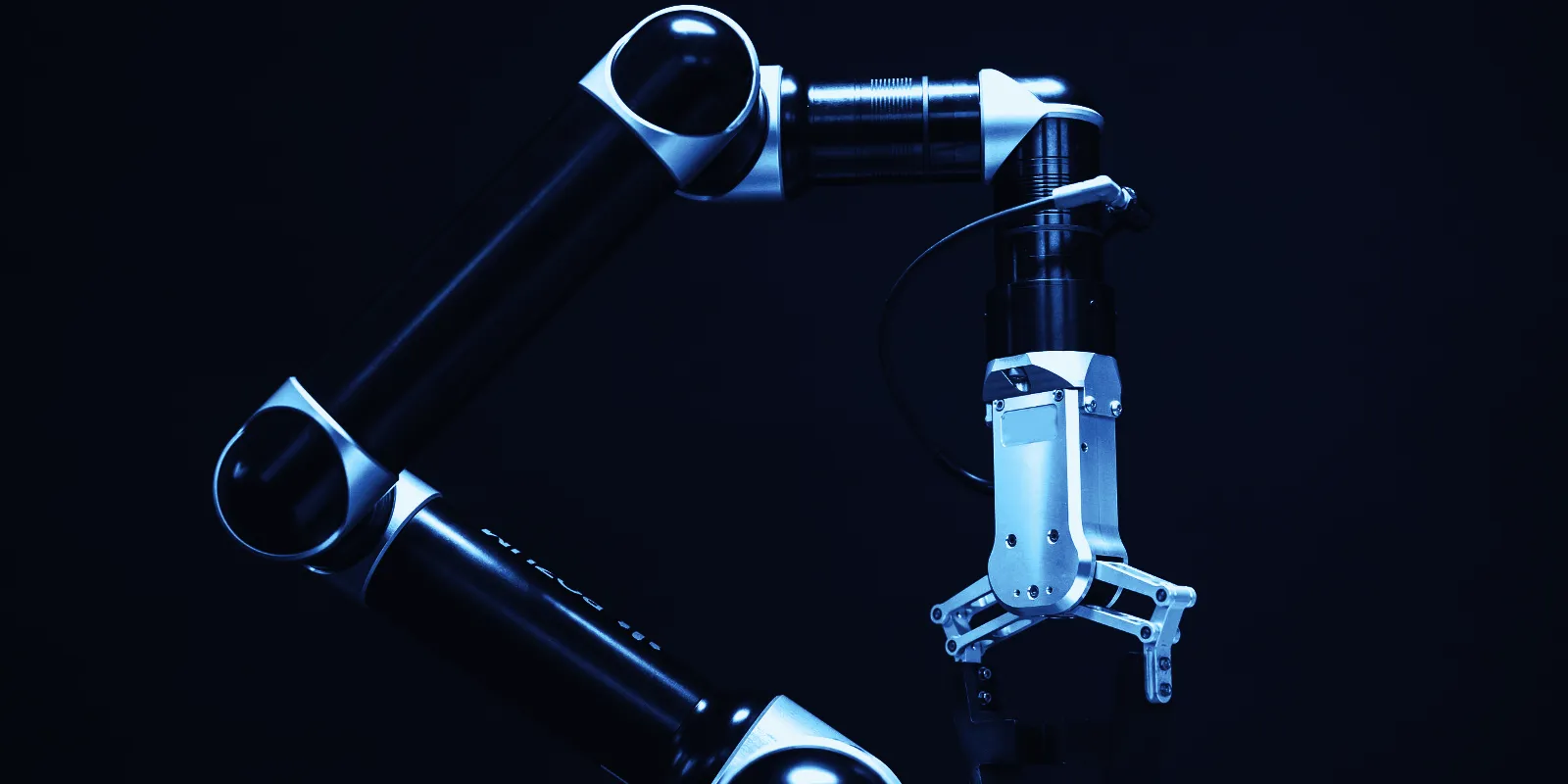
Collaborative robots, or cobots, are designed to work near people without a fence around them, typically by limiting speed and force and stopping when they touch something. They are usually smaller and slower than conventional robots, and easier to set up and reprogram. Collaborative operation still needs a risk assessment: a cobot carrying a knife is not safe because the arm is.
There are also mobile robots that move goods around factories and warehouses, and arms mounted on them; the same ideas apply, with navigation added.
Reading a specification
- Payload: the mass it can carry at the wrist, including the gripper.
- Reach: how far the wrist can go from the base.
- Repeatability: how closely it returns to a point it was taught. It is usually much better than its absolute accuracy, how closely it reaches a point given as coordinates, which is why many cells are taught by moving the robot to real positions.
- Axes: how many joints it has to move.
- Speed and cycle time: how quickly it completes a typical move, which matters more than top speed.
What a robot cell is made of
A robot operates as part of a wider system. A working cell usually contains:
- the arm, with motors, gearboxes and position sensors in each joint;
- the controller, the cabinet that runs the motion, and the teach pendant, the hand-held unit used to move and program it;
- the end effector, the tool at the wrist: a gripper, vacuum cups, a welding torch, a spray gun, a screwdriver;
- fixtures and part feeding, so parts arrive where and how the robot expects them;
- sensors: cameras for finding parts or checking them (see machine vision for quality control), force-torque sensors for contact tasks;
- safety equipment: fences, interlocked doors, light curtains, laser area scanners;
- the connection to the line, usually through a PLC that tells the robot when parts are ready and where to send them.
In many projects the gripper, the part feeding and the safety design take more of the work than the robot itself.
How robots are programmed
- With the teach pendant: an operator moves the robot to each position and records it, then writes the sequence in the maker's robot language. Direct and still the most common.
- Offline, in simulation: the cell is modelled on a computer, the program is written and checked for reach, collisions and cycle time there, then loaded into the real robot and touched up.
- By hand-guiding: many cobots can be pushed through a motion by hand and record it.
- With sensors in the loop: vision tells the robot where each part is, so it no longer needs every part in exactly the same place.
Safety
Industrial robots are fast and strong, and safety is designed in from the start. The ISO 10218 standards set requirements for the robots themselves and for integrating them into a system, and every installation begins with a risk assessment: what could go wrong, how badly, and which measures (guards, sensors, reduced speed, procedures) reduce it.
Where AI comes in
Most robots in factories still run fixed programs, and do so very reliably. AI is extending what they can handle: vision that finds parts lying in random positions in a bin, models that judge a grasp on objects of varied shape, and inspection that decides what to do with a part. The robot's motion stays tightly controlled; learning is used where the world is too varied for fixed rules.
Before starting a robot project
- Describe the task exactly: the parts, their variation, the cycle time you need.
- Look at how parts will arrive and be held, before choosing the robot.
- Simulate the cell to check reach, cycle time and collisions.
- Plan safety and the connection to the rest of the line from the first drawing.
Contact us to discuss robotics for your production process.